Community Article
Mattress Sewing Machines: Choosing Professional Equipment for Quality Mattress Production
Mattress manufacturing requires specialist equipment capable of handling thick materials, multiple fabric layers and demanding production schedules. Unlike ordinary garment production, mattress construction involves large, bulky components that must be stitched accurately while maintaining consistent dimensions and structural integrity. From preparing quilted panels to attaching borders and finishing mattress edges, sewing machinery plays an essential role in determining the appearance, durability and consistency of the finished product. For manufacturers seeking to improve efficiency, choosing the right equipment can have a significant influence on production capacity and operating costs.
For businesses researching Mattress Sewing Machines, understanding the different types of equipment and their specific applications is an important starting point. Mattress production involves several sewing operations, each requiring particular machine capabilities. Quilting machines prepare decorative and functional fabric panels, border sewing machines assemble side sections, and tape edge machines complete the perimeter stitching that joins the mattress components. Additional specialist equipment may be used for attaching handles, labels and other finishing details. Selecting machinery that matches the intended product range helps manufacturers achieve reliable results without investing unnecessarily in equipment that offers little practical benefit.
The construction of a mattress creates challenges that are not normally encountered when sewing ordinary clothing or lightweight textiles. Mattress covers may contain multiple layers of fabric, foam, fibre and backing material, while the completed product can be difficult to manoeuvre because of its size and weight. Sewing machines designed for mattress production therefore require suitable feeding mechanisms, robust construction and sufficient working space. Depending on the operation, equipment may also incorporate specialised material guides, automated positioning systems and mechanisms that assist with moving the mattress during stitching.
One of the most recognisable machines used in mattress production is the tape edge sewing machine. This equipment joins the mattress's upper and lower panels to its surrounding border using a continuous strip of binding tape. The process creates the finished perimeter seam and contributes significantly to the mattress's appearance. Consistent stitching is essential because irregular seams, uneven tape positioning or poorly formed corners can affect the presentation and quality of the finished product. Tape edge machines are therefore important pieces of equipment for manufacturers producing conventionally constructed mattresses.
Traditional tape edging often involves an operator guiding the sewing head around the perimeter while controlling the position of the mattress. This requires experience because the size and shape of the product can make accurate handling difficult. Modern tape edge machinery may incorporate motorised movement, automated turning systems and programmable controls that reduce the amount of manual handling required. The appropriate level of automation depends on production volume, mattress construction and available factory space. Smaller workshops may achieve satisfactory results using semi-automatic machines, while larger manufacturers may benefit from equipment designed for continuous, higher-volume operation.
The choice of Mattress Sewing Machines should also reflect the materials being processed. A mattress constructed with thick upholstery fabrics, multiple cushioning layers and reinforced borders may require different sewing capabilities from a lightweight foam mattress with a removable textile cover. Material thickness, compressibility and surface characteristics all influence how fabric moves through the machine. Equipment with suitable presser foot arrangements and feeding mechanisms can help maintain consistent movement, reducing the risk of uneven seams or material distortion.
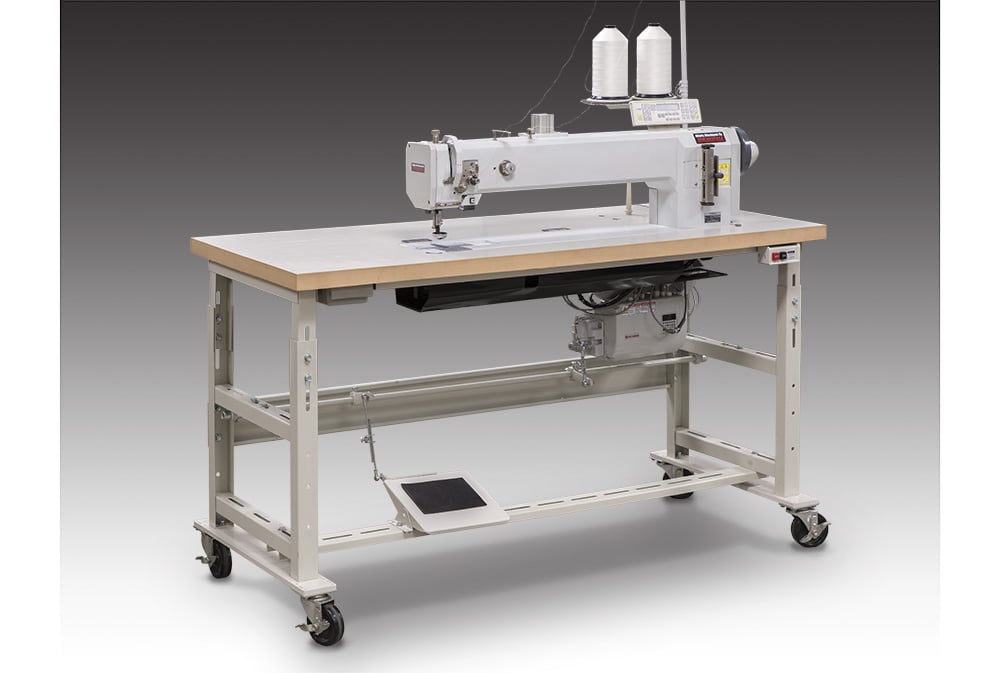
Walking-foot sewing machines are particularly useful for handling multiple layers of fabric and cushioning materials. Their feeding mechanisms help move upper and lower material layers together, reducing the tendency for one layer to advance faster than another. This is important when stitching thick borders or upholstery components where inaccurate feeding can create wrinkles and uneven alignment. Some industrial machines use compound-feed systems that combine needle movement with presser foot and feed-dog action, providing additional control over difficult materials. The correct configuration depends on the particular sewing operation and the thickness of the assembled components.
Quilting machines represent another major category of equipment used in mattress production. These machines stitch together layers of fabric and padding to create the quilted surfaces commonly found on mattress panels. Quilting patterns can serve both decorative and practical functions, helping maintain the position of cushioning materials while creating a consistent finished appearance. Mattress manufacturers may use different patterns across their product ranges, allowing visual differentiation between entry-level, mid-range and premium products. Computer-controlled quilting equipment can store multiple designs and reproduce them accurately across repeated production runs.
Modern quilting systems vary considerably in size and sophistication. Some machines operate using a single sewing head that moves across the material, while others use multiple needles to produce stitching patterns over a wider working area. The appropriate arrangement depends on the required pattern flexibility, fabric width and production volume. Multi-needle machines can offer advantages for repetitive high-volume operations, while computerised single-needle systems may provide greater flexibility for complex or frequently changing designs. Manufacturers should assess the relationship between pattern complexity and actual production requirements before selecting a machine.
For companies producing several mattress sizes, flexibility can be particularly valuable. A factory may manufacture single, double, king-size and super king-size mattresses alongside specialist dimensions for particular customers. Sewing equipment must accommodate these variations without creating excessive downtime between production runs. Machines with adjustable guides, programmable settings and suitable working areas can simplify changeovers, helping operators maintain consistent quality across different products. However, sophisticated adjustment features only provide value when they are genuinely required by the business's production schedule.
Border sewing is another important operation within mattress manufacturing. The border forms the vertical side section of the mattress and may incorporate decorative stitching, reinforced seams, handles, labels and ventilation components. Depending on the product, border material may be quilted, assembled from several fabric sections or finished with additional design details. Specialist border sewing machines help prepare these components before final assembly, supporting accurate dimensions and consistent stitching. This is particularly important because poorly aligned borders can create difficulties during tape edging and affect the appearance of the completed mattress.
Some mattress borders include decorative patterns or contrasting materials that require careful stitching. Industrial sewing machines equipped with suitable guides and feed mechanisms can help maintain accurate seam placement, particularly when processing long strips of material. Manufacturers may also use dedicated machines for attaching handles or reinforcing selected areas. These operations can be repetitive, making specialised equipment useful where large quantities of mattresses are produced. However, smaller businesses may prefer versatile industrial machines capable of performing several related tasks.
The integration of automated handling equipment can make a substantial difference to the efficiency of mattress sewing operations. Completed mattresses are bulky and can be difficult for operators to lift, turn or reposition repeatedly. Automated turning tables, conveyor systems and adjustable workstations can reduce this physical effort while helping maintain a more predictable production sequence. These systems are particularly valuable in larger factories where a significant number of mattresses move through sewing and finishing departments each day. However, automated handling equipment must be matched to the dimensions, weight and construction of the products being manufactured.
Some specialist sewing machines are designed specifically for attaching flanges to mattress panels. Flanging involves sewing additional material around the edge of a panel so that it can be secured to other components during mattress assembly. This process is particularly relevant to certain spring mattress constructions, where the flange helps connect upholstered panels to the internal structure. Automated flanging machines can improve consistency and reduce manual handling, although the required configuration depends on the manufacturing method and mattress design. Specialist manufacturers offer equipment for flanging, border quilting, panel preparation and automated tape edging as separate stages of production.
MPT Group+1
Mattress cover production presents another important application for industrial sewing equipment. Some manufacturers produce removable covers designed to fit around foam or hybrid mattress cores. These covers may incorporate zips, specialist fabrics and carefully positioned seams that allow them to fit securely without excessive tension. Cover sewing machines must accommodate relatively large fabric components while maintaining accurate alignment. Depending on the product, automated systems may perform operations such as inserting zips, joining cover panels or sewing pre-prepared borders. This equipment can be particularly valuable where manufacturers produce substantial quantities of removable mattress covers.
English
The choice of stitch formation is fundamental to mattress sewing quality. Lockstitch machines use an upper needle thread and lower bobbin thread to form secure seams, making them suitable for many assembly and finishing operations. Chainstitch machines use a different stitch formation and may be selected for particular high-speed production applications. Overlock machines are useful for finishing fabric edges and joining certain textile components. The suitability of each stitch depends on the materials, seam construction and mechanical requirements of the finished product. Manufacturers should therefore evaluate stitch type alongside machine speed and available automation.
Thread selection also influences the performance and appearance of mattress seams. Industrial sewing threads are available in different materials, thicknesses and constructions, allowing manufacturers to select suitable options for upholstery fabrics and other mattress components. A thread used for lightweight decorative stitching may be unsuitable for a heavily loaded structural seam, while an excessively thick thread can create problems with delicate materials. Thread compatibility with the needle, tension system and sewing head is essential for maintaining consistent stitch formation. Incorrect combinations can contribute to skipped stitches, thread breakage and uneven seams.
Needle selection requires similar attention because mattress materials can vary considerably in density and thickness. Industrial sewing machines use particular needle systems, and the correct size and point configuration must be selected for the material being processed. A needle that is too fine may struggle with multiple thick layers, while an unsuitable point can damage fabric or create visible holes. Regular needle replacement is important because worn or damaged needles can affect stitch quality and place additional strain on the machine. Operators should follow manufacturer recommendations and establish consistent procedures for checking needle condition.
For businesses evaluating Mattress Sewing Machines, production speed is an important consideration, but it should not be assessed independently of finished quality. A machine capable of operating at high stitch rates may offer advantages in a factory producing large quantities of standardised mattresses. However, maximum speed is less valuable if operators must repeatedly stop to reposition materials or correct stitching problems. Complex mattress designs, thick borders and decorative finishing may require slower operation to maintain accuracy. The most productive machine is therefore not necessarily the one with the highest advertised stitching speed, but the one that provides dependable output under normal production conditions.
Computer-controlled sewing equipment can improve consistency by allowing selected operations to be programmed and repeated. Automated thread trimming, electronic needle positioning and programmable stitch patterns can reduce repetitive manual tasks and help maintain uniform results. Some machines also incorporate touchscreens that allow operators to select stored settings or adjust parameters between production runs. These capabilities can be especially valuable when manufacturing different mattress ranges requiring specific stitching arrangements. However, businesses should consider the additional training and technical support needed to operate and maintain more sophisticated equipment.
The level of automation should reflect actual production volumes and the complexity of the products being manufactured. A small mattress workshop producing bespoke products may value flexibility and simple adjustments more than maximum operating speed. Larger factories supplying retailers or commercial customers may benefit from machinery capable of performing repetitive tasks with limited operator intervention. Highly automated equipment generally involves greater initial investment, making it important to assess whether expected production volumes justify the expenditure. Purchasing machinery with unnecessary capabilities can tie up capital without producing meaningful operational improvements.
Factory layout can also influence the effectiveness of Mattress Sewing Machines. Sewing operations should be arranged to minimise unnecessary movement between workstations, particularly where large mattress panels and completed products must be handled. A logical production sequence might involve preparing quilted panels, constructing borders, attaching additional components and completing final tape edging before inspection. The arrangement will differ according to the mattress design, but the objective should be to maintain a consistent flow of materials without creating congestion or excessive handling.
The physical dimensions of sewing equipment should be considered before purchase. Large quilting machines and automated tape edge systems may require substantial floor space, including clearance for operators, material loading and maintenance access. Conveyor equipment and turning systems can further influence the layout. Manufacturers should review machine dimensions alongside the size of the mattresses being produced, because sufficient space is needed to move bulky products safely. An installation that appears suitable according to machine dimensions alone may become impractical once working clearances and material movement are taken into account.
Maintenance is an essential part of ensuring that mattress sewing machinery remains reliable. Industrial sewing equipment contains moving mechanisms, bearings, feed systems and other components that require periodic inspection and servicing. Fabric fibres, foam particles and thread debris can accumulate around sewing heads, potentially affecting performance if equipment is not cleaned regularly. Lubrication requirements vary according to machine design, and some modern systems incorporate automatic lubrication or specialised low-maintenance components. Following manufacturer instructions helps prevent unnecessary wear and reduces the risk of unexpected production interruptions.
Preventive maintenance can also help manufacturers maintain consistent stitch quality. Changes in thread tension, worn feed components or incorrectly adjusted presser feet may gradually affect sewing performance before a complete mechanical failure occurs. Regular inspections allow these problems to be identified and corrected before substantial quantities of defective material are produced. Keeping commonly required replacement components available can reduce downtime, particularly when a workshop relies on one specialist machine for an essential operation.
Workplace safety should remain a priority throughout mattress sewing operations. Industrial machinery presents hazards associated with moving needles, drive components, cutting mechanisms and automated material-handling equipment. Appropriate guards, emergency stops and safe working procedures are necessary to reduce risks. The UK Health and Safety Executive advises employers to consider needle protection, adequate lighting, guarded belt drives, suitable seating and regular inspections when operating industrial sewing machines. Automated systems also require consideration of additional guarding and maintenance access arrangements.
HSE+1
Operator comfort is particularly important because mattress sewing can involve repetitive movements and prolonged periods of concentration. Poorly positioned workstations may cause unnecessary reaching, awkward postures and physical strain. Adjustable tables, suitable seating and appropriately positioned controls can help create more comfortable working conditions. Where operators must handle heavy or bulky components, mechanical assistance may reduce the physical demands of the task. These considerations can support productivity by making it easier for employees to maintain consistent performance throughout the working day.
Quality control should be integrated into the production process rather than left entirely until the mattress is completed. Checking stitching accuracy, seam alignment and material positioning at appropriate stages can help prevent minor problems from affecting subsequent operations. A poorly prepared border, for example, may create difficulties during tape edging and produce an uneven finished appearance. Identifying the issue before assembly is completed can reduce reworking and material waste. Manufacturers should establish clear quality expectations and ensure that operators understand how to recognise unacceptable defects.
When purchasing new equipment, businesses should consider the reputation and support capabilities of the supplier. Specialist mattress sewing machines can represent a significant investment, making reliable technical assistance important. Suppliers that provide commissioning, operator training, spare parts and maintenance support can help reduce the operational risks associated with introducing new machinery. Access to knowledgeable engineers may be particularly valuable when equipment incorporates computer-controlled functions or specialist mechanical arrangements.
Used and refurbished machines may offer an alternative for businesses seeking to manage capital expenditure. Established industrial sewing equipment can remain productive for many years when properly maintained, and refurbished machinery may provide access to specialist capabilities at a lower purchase price. However, buyers should assess mechanical wear, electrical safety, component availability and the condition of the sewing mechanism. Older equipment may also lack modern safety features or require additional maintenance. A lower purchase price should therefore be considered alongside the expected cost of bringing the machine into reliable service.
Energy consumption is another consideration, particularly in factories operating numerous sewing machines throughout the day. Modern servo motors and direct-drive systems may reduce unnecessary electricity use compared with certain older motor arrangements, especially where machines spend significant periods idle between operations. However, overall operating costs also depend on production speed, maintenance, labour and the efficiency of material handling. Energy performance is therefore one component of a broader assessment rather than the only factor determining equipment value.
The ability to accommodate changing product designs can provide long-term advantages for mattress manufacturers. Consumer preferences and retailer requirements may lead businesses to introduce new mattress depths, decorative finishes or construction methods. Equipment that allows efficient adjustments between different specifications can help manufacturers respond without replacing machinery unnecessarily. However, flexibility should be evaluated according to realistic production requirements. A machine offering extensive automated functions may not provide sufficient value if the factory produces only a limited range of standardised products.
For manufacturers comparing Mattress Sewing Machines, the most effective purchasing approach is to consider how each machine contributes to the complete production process. A highly capable quilting system offers limited benefit if downstream sewing and finishing operations cannot process its output efficiently. Similarly, investing in automated tape edging may not improve overall productivity if earlier stages continue to create delays. Evaluating the capacity of each production stage helps identify where investment is most likely to improve workflow and finished quality.
The quality of mattress sewing equipment also has implications for customer satisfaction. Consistent seams, neatly finished borders and accurate decorative stitching contribute to the appearance and perceived workmanship of a mattress. Although internal construction and material quality remain essential, visible stitching can influence how customers judge a finished product. Reliable machinery helps manufacturers maintain consistent presentation across different production batches, which can be particularly important for businesses supplying established retail ranges or producing mattresses under recognised brands.
As manufacturing technology continues to evolve, automated handling and digital control systems are likely to remain important areas of development. Modern mattress production increasingly combines specialist sewing equipment with conveyors, programmable workstations and material-positioning systems. These technologies can help reduce repetitive tasks and support consistent output, but their benefits depend on appropriate integration and operator training. Manufacturers should assess whether automation addresses an identifiable production challenge rather than assuming that a fully automated system is always the most economical choice.
Choosing Mattress Sewing Machines ultimately requires a balance between machine capability, material compatibility, production capacity and long-term reliability. Tape edge machines, quilting equipment, border sewing systems and specialist finishing machinery each perform important functions within mattress manufacturing. Businesses that select equipment according to their actual production requirements, maintain machinery correctly and provide suitable operator training are better positioned to achieve consistent stitching quality and efficient workflows. By considering installation, maintenance, safety and supplier support alongside purchase price, manufacturers can establish dependable sewing operations that support both current production and future business development.