Community Article
Schaltbau Snap Action Switches: Understanding Precision Switching in Industrial Systems
Reliable switching is fundamental to the operation of modern electrical and electromechanical equipment. From detecting the position of a mechanical component to confirming whether a door, lever or safety mechanism has reached its intended position, switches provide essential information to control systems. In demanding industrial and transportation environments, these components may need to perform consistently across extremely high numbers of operating cycles.
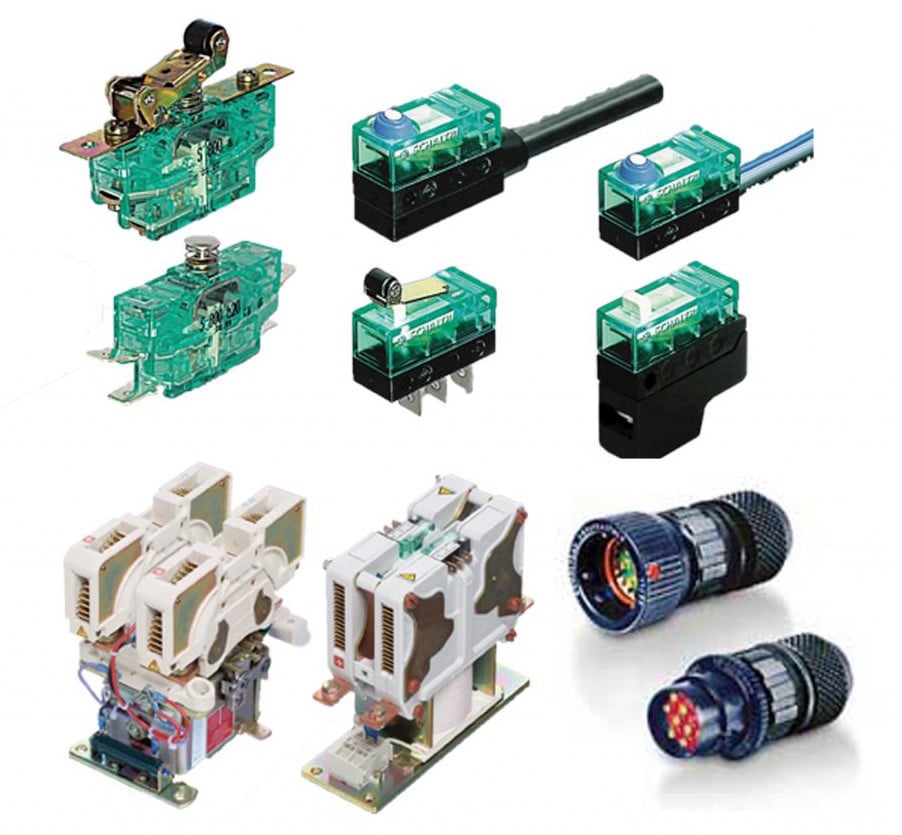
Schaltbau Snap Action Switches are associated with applications requiring rapid and dependable switching when a defined mechanical operating point is reached. Snap-action technology differs from a simple slow-moving contact mechanism because the internal contacts change state rapidly once the actuator reaches a predetermined position. This characteristic can provide consistent switching behaviour even when the external actuator itself is moving relatively slowly.
What Is a Snap Action Switch?
A snap action switch is an electromechanical device designed to change the state of its electrical contacts when sufficient mechanical force or movement is applied to an actuator.
The mechanism stores mechanical energy as the actuator moves. Once a defined operating point is reached, the internal mechanism rapidly moves the contacts from one position to another.
This creates the characteristic "snap" operation from which the technology takes its name.
The switch may then return to its original state when the operating force is removed, depending on its configuration and intended application.
Why Rapid Contact Movement Matters
A conventional mechanical movement can occur at widely varying speeds depending on how the equipment is operated.
One operator might move a lever quickly, while another mechanical system might move the same actuator very slowly.
Snap action mechanisms help separate the speed of the electrical contact movement from the speed of the external actuator.
Once the operating threshold has been reached, the contacts transition rapidly.
This can provide more consistent electrical switching characteristics across different mechanical operating conditions.
Detecting Mechanical Position
One common application for snap action switches is position detection.
A moving component can operate the switch when it reaches a particular location, providing an electrical signal confirming its position.
This principle can be used in doors, access panels, mechanical linkages, actuators and numerous other assemblies.
The control system can then respond according to whether the switch is open or closed.
Applications in Transportation
Transportation equipment contains many moving mechanical systems that need to interact with electrical controls.
Rail vehicles, for example, contain doors, couplings, braking equipment, control mechanisms and numerous other systems where position or status may need to be detected.
Components used in these environments can experience vibration, mechanical shock, temperature variations and intensive operating cycles.
Switch selection therefore needs to consider environmental and mechanical requirements alongside basic electrical ratings.
Industrial Machinery
Snap action switches are also widely applicable within industrial machinery.
Manufacturing equipment may contain guards, moving arms, actuators, conveyors and mechanical assemblies that need position monitoring.
A switch can indicate when equipment has reached a particular point in its operating sequence.
The resulting electrical signal may then be used by a control system as part of a wider automation process.
Actuator Configurations
Not every application operates a switch in the same way.
Some installations can press directly against a simple plunger, while others require a lever, roller or alternative actuator arrangement.
Roller actuators can be useful where a moving component passes across the switch rather than pressing directly into it.
Lever mechanisms can provide additional travel or allow the switch to respond to movement occurring further away from the switch body.
Choosing the correct actuator arrangement can therefore be just as important as selecting the electrical characteristics.
Operating Point and Release Point
Snap action switches typically have defined operating and release characteristics.
The operating point describes the actuator position at which the contacts change state.
When the actuator returns, the switch may not immediately change back at exactly the same position.
The difference between operating and release positions is sometimes described as differential movement.
Understanding these characteristics is important when precise mechanical position detection is required.
Electrical Contact Arrangements
Switches can be configured with different contact arrangements depending on the circuit requirements.
A normally open contact remains open until the switch is operated.
A normally closed contact performs the opposite function, remaining closed until operation occurs.
Changeover configurations can provide both functions, allowing one circuit to open while another closes.
The correct arrangement depends entirely on the control system being designed.
Electrical Load Requirements
Switch selection must take account of the electrical load being controlled.
Voltage and current ratings should always be appropriate for the application.
Different electrical loads can also behave differently during switching. Resistive, inductive and other load types can create different demands on electrical contacts.
Engineers therefore need to consider the actual switching conditions rather than selecting components solely according to nominal voltage.
Contact Materials
Contact material can influence switching performance and longevity.
Applications involving relatively high currents may have different requirements from low-level signal circuits.
Very small electrical signals can present their own challenges because contamination or contact resistance may have a greater influence on circuit performance.
The switch specification should therefore match the electrical characteristics of the system.
Mechanical Durability
Many switching applications involve repeated operation.
A switch installed in equipment that operates occasionally has very different lifecycle requirements from one used in a high-frequency industrial process.
Mechanical endurance specifies how many operations the mechanism is designed to withstand under defined conditions.
Electrical endurance may be different because switching electrical loads introduces additional wear at the contacts.
Both factors should be considered when assessing expected service life.
Environmental Conditions
Industrial and transportation equipment can operate in challenging environments.
Temperature extremes, humidity, dust, vibration and contamination may all affect electrical components.
Switch housings, sealing arrangements and connection methods therefore need to suit the environment in which the component will operate.
Where equipment is installed in exposed locations, environmental protection can become particularly important.
Vibration and Shock
Transportation applications frequently involve sustained vibration and occasional mechanical shock.
Industrial machinery can produce similar conditions.
A switch used in these environments needs to maintain reliable electrical contact while avoiding unintended operation caused by vibration.
Mechanical mounting is therefore an important part of installation as well as component selection.
Accurate Installation
Even a correctly specified switch can perform poorly if it is installed incorrectly.
The mechanical actuator should engage the switch within its intended operating range.
Excessive force or travel can potentially damage the mechanism, while insufficient movement may result in unreliable switching.
Designers should therefore consider actuator geometry carefully during equipment development.
Avoiding Excessive Overtravel
Some switch mechanisms allow movement beyond the operating point, known as overtravel.
A degree of overtravel can help accommodate mechanical tolerances, but the allowable limits should not be exceeded.
Equipment designers should ensure the mechanism cannot repeatedly force the actuator beyond its specified movement range.
Mechanical stops may be required where uncontrolled movement could otherwise occur.
Supporting Fault Diagnosis
Switches often provide useful diagnostic information.
If a control system expects a mechanical component to reach a particular position but the associated switch does not change state, the system may identify a fault.
Technicians can then investigate whether the problem lies with the switch, wiring, actuator or mechanical equipment.
Clearly documented switch positions and circuit references make this troubleshooting process considerably easier.
Maintenance Considerations
Switches installed in long-life equipment should be accessible where practical.
Technicians may eventually need to inspect wiring, check mechanical operation or replace the component.
Placing switches in inaccessible positions can significantly increase maintenance time.
Good engineering design therefore considers serviceability alongside initial installation.
Safety-Related Applications
Mechanical switches can form part of systems associated with safety functions, but component selection must reflect the requirements of the complete safety architecture.
A standard position switch should not automatically be assumed suitable for a safety-critical application.
Relevant standards, required safety integrity and system redundancy must all be considered by appropriately qualified engineers.
Designing for Long Service Life
The operating environment, electrical load and mechanical cycle rate all influence switch longevity.
Choosing a switch simply because it physically fits can therefore be a false economy.
Engineers should assess expected operating cycles, electrical characteristics, actuator movement, environmental exposure and maintenance requirements together.
This system-level approach can reduce premature component failure and improve overall equipment reliability.
The Importance of Correct Specification
Snap action switching appears straightforward, but there are numerous variables involved.
Actuator style, operating force, travel, electrical contacts, current rating, environmental protection and expected lifecycle all contribute to successful selection.
The correct solution is therefore determined by the application rather than by one specification alone.
Ultimately, Schaltbau Snap Action Switches illustrate how precision electromechanical switching can be used to detect movement and position across transportation, industrial and engineering systems. Correctly specified snap action switches can provide rapid, repeatable contact operation while supporting reliable control, monitoring and diagnostic functions throughout demanding equipment lifecycles.